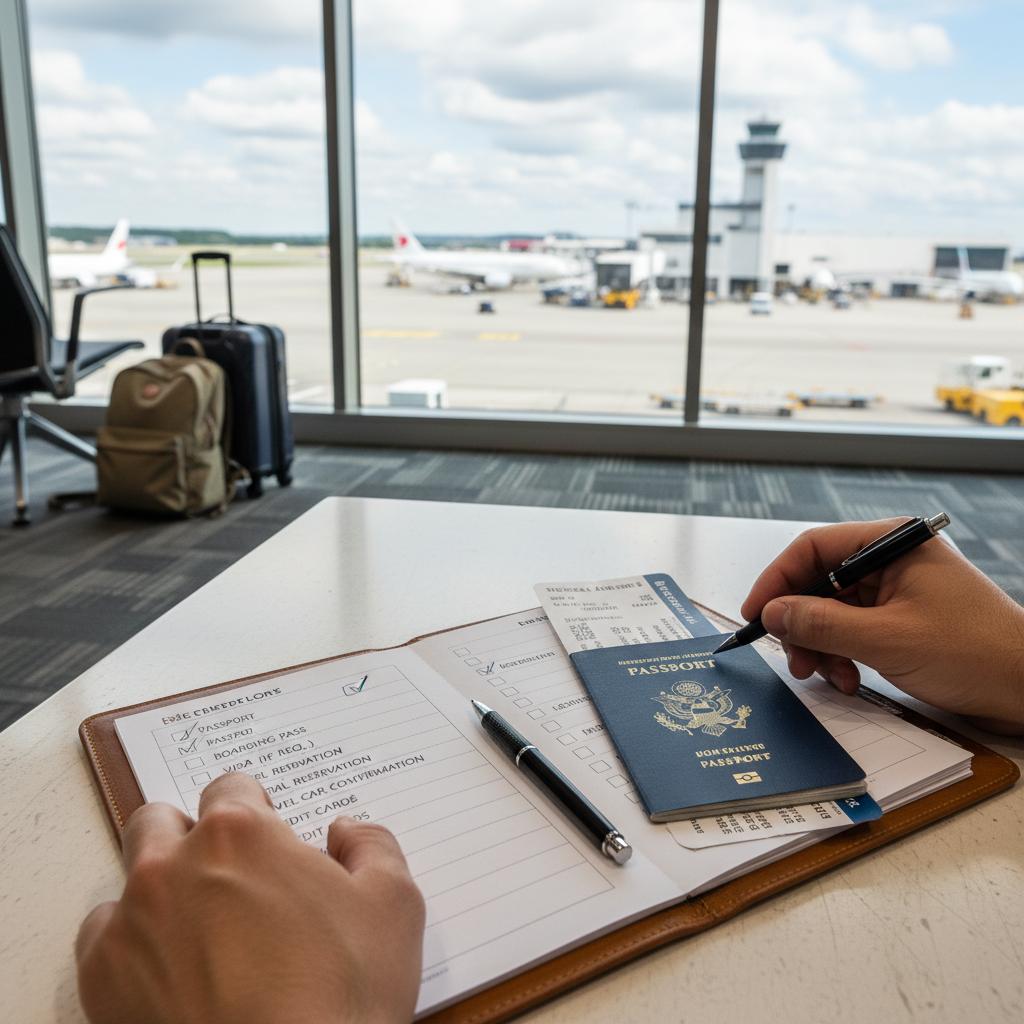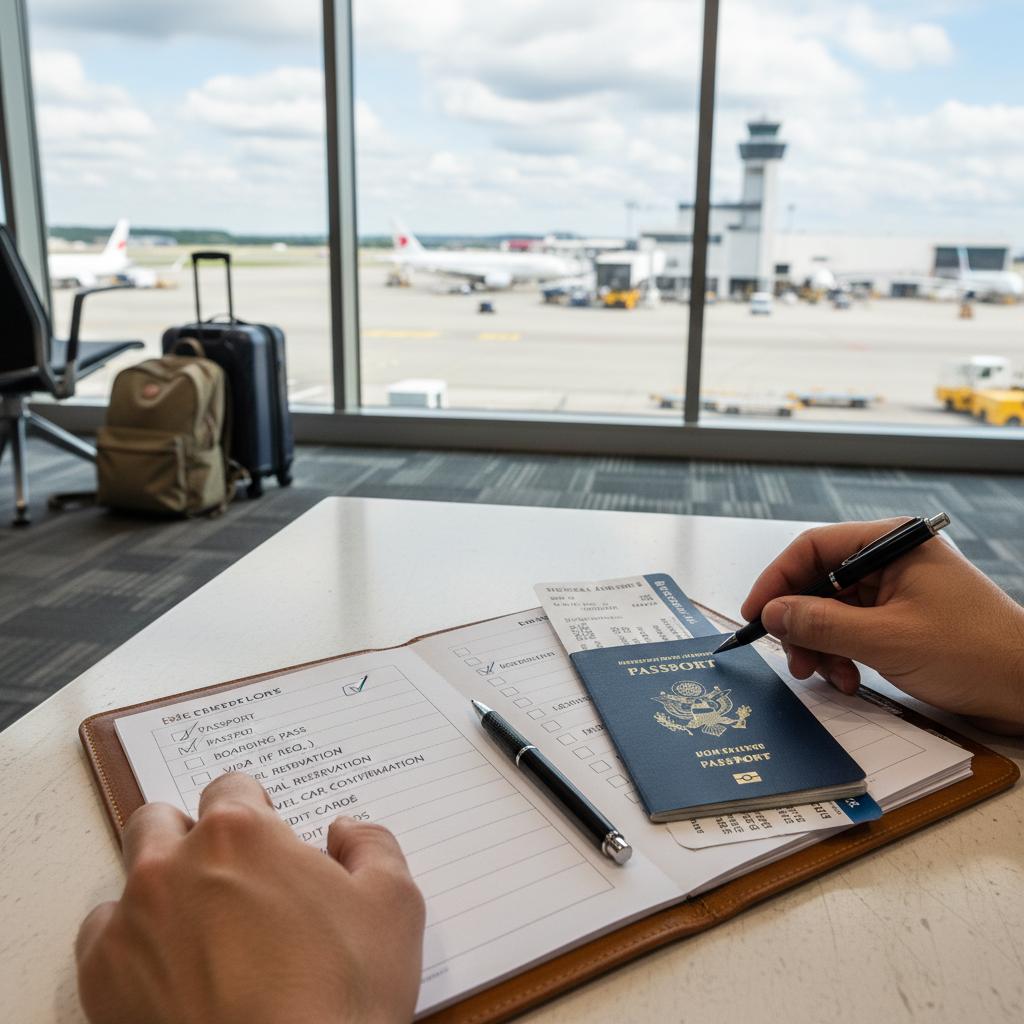
Start with the rules for your actual journey
An international flight is easier to manage when you separate the decisions you can control from the details the airline or a government controls. Write down your departure airport, connecting airport, destination, travel dates and the passport or travel document you will use. Those details matter when checking entry and transit rules; advice written for another nationality or route may not apply to you.
Use the airline's official booking record to check passenger names, the ticketed route and any connection. Use the destination's official immigration or embassy resources to review entry conditions. If a visa or other document is required, allow enough time to obtain it before making an irreversible commitment. Keep confirmation emails and reference numbers together in a place you can access offline.
Compare flights beyond the headline price
A low advertised fare may not cover the total cost of your trip. Compare baggage, seat selection, change and cancellation conditions, the arrival airport and the amount of time between flights. If an itinerary involves separate tickets, ask what happens to checked bags and whether you would need to pass through immigration and check in again.
When comparing options, picture the entire travel day rather than the flight duration alone. A connection that looks efficient on paper may be uncomfortable for a family travelling with small children or a traveller needing mobility assistance. Consider a larger buffer when the connection involves changing terminals or navigating a very large airport.
Create an easy document routine
Check passport validity and relevant documentation requirements well ahead of departure. Requirements vary by nationality, itinerary and destination; do not assume there is a single passport-validity rule for every country. Save copies of confirmations and important documents in an encrypted or otherwise secure location. Take only the documents you need in your accessible carry-on.
A simple folder can contain the booking confirmation, accommodation address, onward itinerary, insurance information if purchased and any official entry approvals. Keep emergency contacts separate from your phone where practical. If you are travelling with children or another person's child, check whether additional consent or identity documents apply to your route.
Make the final 48 hours count
Check in using the airline's official website or app when online check-in becomes available for your booking. Review baggage dimensions and weight, power-bank restrictions and the airport terminal. Confirm the latest departure time, especially if your itinerary has already changed once. Arrange transport to the airport with enough time for your specific airline's check-in and baggage-drop deadlines.
Charge your phone and power bank, pack essential medication in accordance with applicable rules and keep valuables close. Add a spare set of basic clothing to your carry-on if checked bags are delayed. Revisit official travel advisories immediately before travel, because a guide written months earlier cannot account for every last-minute change.
At the airport
Follow the airport and airline's current instructions for baggage drop, security, departure controls and boarding. Keep your travel documents accessible but secured. If your flight is delayed or a connection looks tight, ask the operating airline about available options rather than relying only on a third-party app's status.
A little preparation cannot eliminate delays, but it makes them easier to handle. The goal is a manageable checklist, clear official sources and enough flexibility to deal with the unexpected without losing track of your essential documents or travel plans.