Check the allowance before opening the suitcase
There is no single cabin-baggage rule that covers every airline and fare. Check the dimensions, weight and number of pieces permitted by your operating carrier, including any smaller aircraft in a multi-leg itinerary. Some tickets allow only a compact under-seat item, while others include an overhead bag. Airport enforcement and gate checks can affect what stays with you.
Pack the bag you are most likely to keep with you as though your overhead suitcase might be checked at the gate. That means your identity and travel documents, essential medication, valuables and any items the airline says must remain in the cabin should be easy to move into your smaller personal bag.
Build a documents and essentials pouch
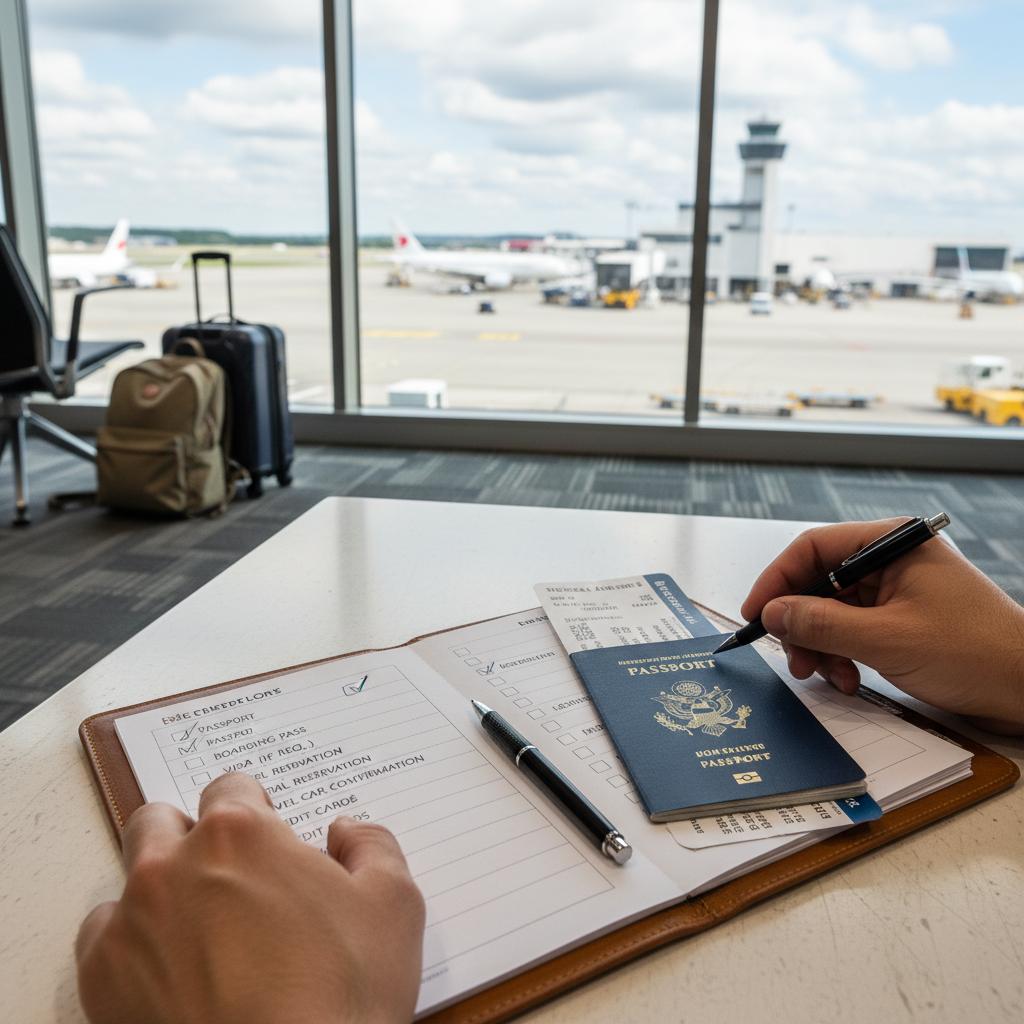
Keep your passport or accepted identity document, tickets or booking information, required approvals and a payment method together. Use a zipped compartment instead of an open outer pocket. Save a secure offline copy of your itinerary and the contact information for your airline, accommodation and emergency contacts.
Bring any essential prescription medication in its original labelled packaging where appropriate, along with supporting documentation if required by the destination. Check current rules for liquids, medical devices and controlled medicines along your particular route. Do not use a general packing list in place of a government's or airline's official restrictions.
Create a small comfort kit
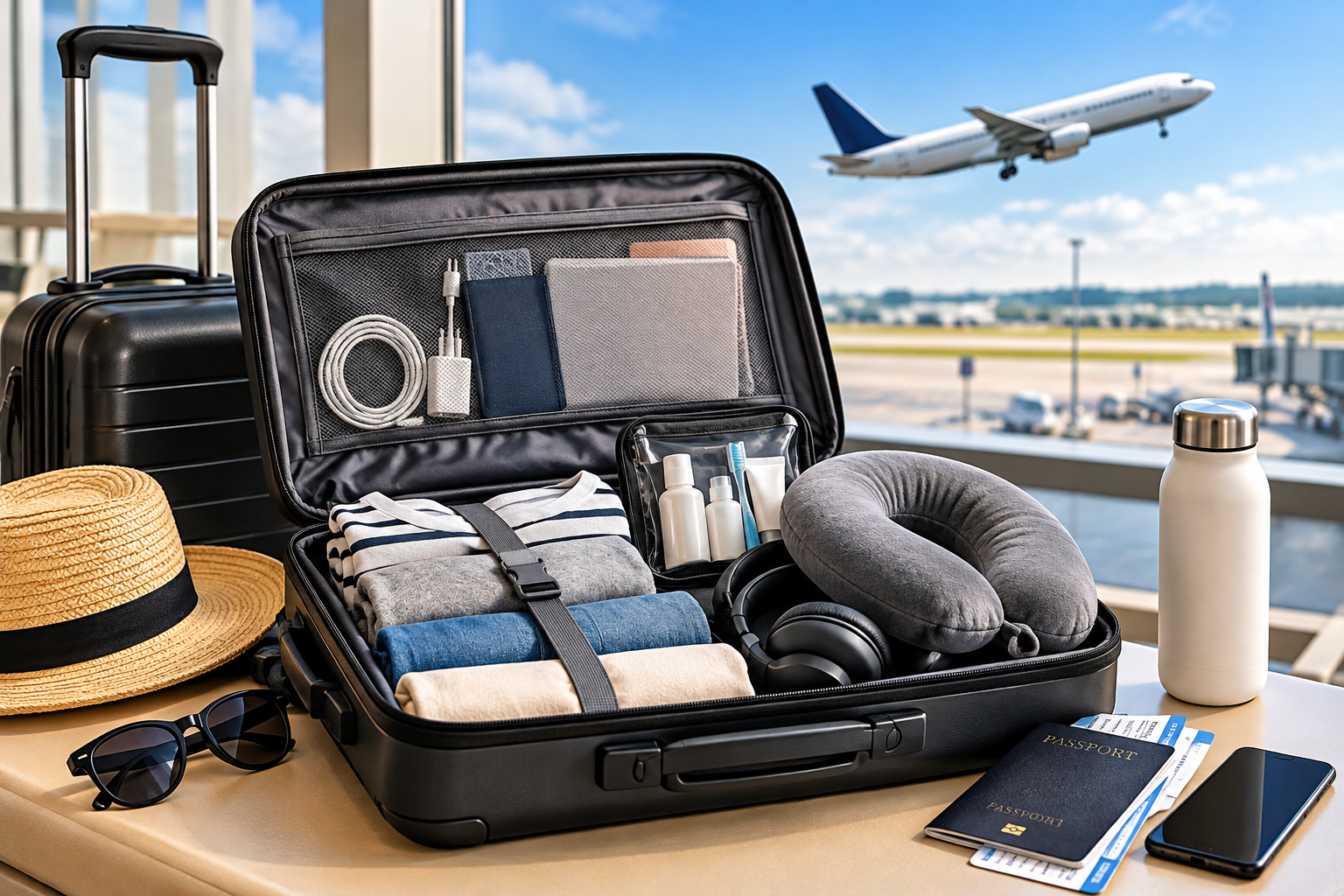
For a long journey, consider headphones, an eye mask, an empty refillable bottle, a light layer and permitted snacks. A pen may still be useful for forms or notes, while a downloaded book or podcast can help during a period without internet. If travelling with children, pack a few quiet activities and a change of clothes within easy reach.
Choose items based on the journey rather than packing every suggested gadget. A short daytime flight may require very little, while an overnight connection can benefit from toiletries and spare clothing. Keep the kit small enough that you can find what you need without unpacking your bag in a crowded aisle.
Electronics deserve their own check
Charge your devices before departure and download maps, tickets and important instructions. Spare batteries and power banks often have specific carriage restrictions; confirm the operating airline's latest instructions and any airport security rules before packing them. Keep chargers and cables together in a small pouch.
Avoid depending on mobile data in an unfamiliar country for an essential booking code or accommodation address. If you will land at night, keep the offline information needed to reach your accommodation even if your device loses power or connectivity. A small amount of preparation can remove several avoidable arrival-day problems.
Pack for the first hour after landing
Imagine arriving without immediate access to checked luggage. Would you still have the essentials for an unexpected overnight delay, necessary medication, a suitable layer of clothing and a way to contact someone? That thought experiment helps prioritise your cabin space far better than packing items purely because they fit.
Finally, weigh and measure your bags again once they are full. A tidy cabin bag is useful only if it meets the carrier's rules and you can safely lift and manage it. Keep your essentials close, travel light where possible and leave space for the unfamiliar parts of your journey.